
Human reality has a very curious trait. It is the trait of being both simultaneously an objective and a subjective experience. In spiritual terminology, this is often referred to as dualism. What is meant by this? Well, what do we typically mean when we speak in terms of object versus subject?
An object, in the simplest terms, is a noun, a person, a place, or a thing. A subject is far more complex. A subject is a verb, an action, a state of being, or a behavior. An object is the individual and the subject is that individual existing through time. A subject is a character. A character that exists in relation to, and is intertwined with, a grander narrative backdrop. When we consider the subject, the character and the backdrop are one and the same.
Objective reality is measurable, whereas subjective reality is immeasurable. Objective reality is the fact that you are a biological entity, measurably separate and distinct from other individuals. Subjective reality is the fact that you are the inhabitant of an immeasurable inner narrative that you call “Life”.
An objective reality, objective truth is arrived at naturally and is a direct product of raw unbiased information. All of the raw information feeding into you physically comes in through your sensory organs. To you, as an individual organism, this sensory information is in the most objective basic form available. This is your foundational mode of existence. An existence mode involving you sitting in your seat of consciousness and receiving this endless supply of sensory information.
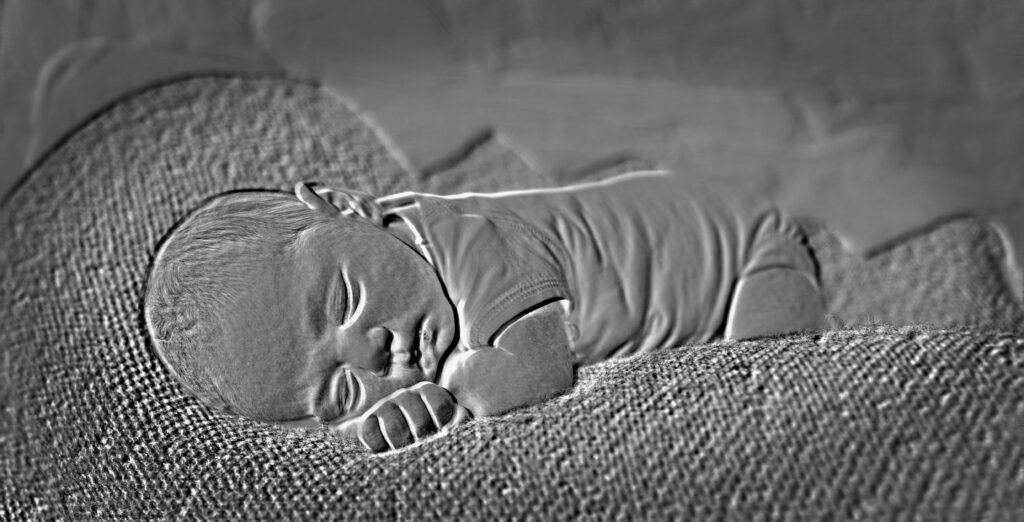
When a baby enters into the physical world they are in their rawest most pure physical form. From the newborn babies’ perspective, the world feeding in through their senses is all just a part of the experience of existing. To them, all of this information is simply a part of themselves. They have not yet been conditioned to perceive the world as different from themselves. Their eyes have yet to learn to properly see, their ears have yet to learn to properly hear, their brains have yet to learn to make distinctions and so their thoughts haven’t even begun to frame things in the context of separated forms. They are one with all of existence as they perceive it.
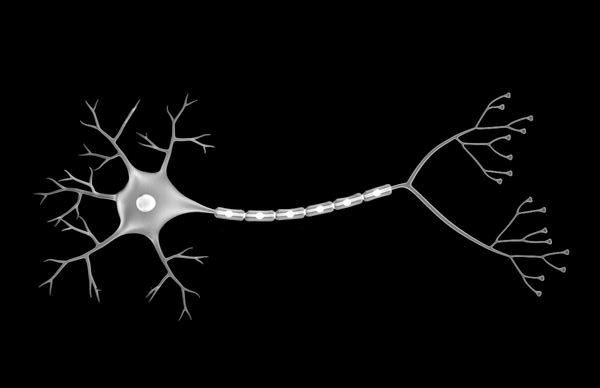
Over time the baby human organism continues to grow, learn and evolve. Zooming in to the resolution of seeing individual cells within the baby we see that their nervous system already consists of billions and billions of individual nerve cells called neurons. Neurons are what convey neurological information throughout the body. The evolution of the nervous system is driven by the repeated maintenance and strengthening of certain neuronal pathways. Pathways that are used regularly become strengthened while unused pathways weaken. Your nervous system runs throughout your entire body and it includes your sensory organs as well as your entire brain. It all acts as one profoundly complex, fascinating energy pattern that both interacts with objective reality and simultaneously generates your subjective reality.
If we look even closer at individual neurons we see that they are more complex than simple unitary strands. In fact, we see that the individual neurons have a branching physical form. Each neuron has numerous input tentacles called dendrites. There is a long single strand leading away from the dendrites which then splits into several more output tentacles. Each of these output tentacles have a bulge at the ends forming synaptic terminals. All of these synaptic terminals have numerous individual synapse. The synapse broadcast the neurological information to the dendrites of neighboring neurons and in this way neurological circuits are formed. Within each individual neuron there is a multitude of available pathways for information to travel along. In the brain specifically, it is more appropriate to think of your neurological substrate as a complex network rather than a bunch of chain links.
In the first few years of life, the complexity of the entire nervous system grows rapidly. The general consensus amongst neuroscientists is that by the age of 2 or 3 we already have an estimated 100 billion neurons and each neuron has 15,000 individual synaptic connection points. This extravagantly complex nervous system is ideal for the infant because it is the most fertile substrate for the development of skills. Initially, the infant develops the most basic functional skills such as controlling its muscles or generating sounds with its vocal cords. Later they will proceed to more advanced skills. Skills such as walking and speaking words. Eventually, they will begin to develop skills for language and writing as well as skills regarding the emotional and social aspects of life. The neurological pathways that are used regularly become strengthened while unused pathways weaken. This vastly complex system of biological cells is endlessly molded by experience through time. This is an objective description of an evolving baby human organism as it develops.
From the developing infant’s perspective, however, reality is also unfolding in the far more complex subjective dimension. The conditioning of their nervous systems is altering their experience and creating a perception of separation. This perception of separation is a progression out of the initial state of total unity and oneness. The experience is that of becoming an individual. We could call this state a Proto-Egoic state.
Now let’s consider subjective reality. Subjective reality, a subjective truth, is the result of your brain drawing conclusions. Conclusions that come to you naturally and instantaneously from moment to moment. Subjective reality is the result of taking in sensory information and having your rational faculties generate results. Your subjective reality is the perpetual stream of these results being served up by the information-processing areas of your brain. Your brain is where a large portion of the neurons in your body are located. There are various different regions in the brain and each appears to serve a variety of different functions. Neurological science has made incredible advancements in the modern age however, currently in the early 2020s our understanding of brain functionality is far from comprehensive. One thing is exceedingly clear to us though, it is a vastly complex system that behaves in fascinating ways.

One of the fundamental traits of all neurological systems is a capacity for forming patterns. This feature of pattern formation is a fundamental and ubiquitous trait of all neurological systems. From a neuroscience perspective, it’s plausible that this pattern formation trait is the basis for all things that make up our individual identities. Let’s return again to our newborn infant. Pushing aside all humanity and analyzing them “objectively”, at birth the infant is physically little more than a helpless, vulnerable mass of cells. As the infant twitches, wiggles, and squirms it tests its body and nervous system. Each movement is a little test of how the system functions. Gradually the system begins to learn, align, and attune itself. The clumsy twitches begin to become initial coordinated movements. Through this aligning and attuning process the infant eventually begins to develop basic motor controls. The aligning and attuning is occurring by way of the gradual strengthening of neurological pathways. The neurological pathways that are repeatedly used are naturally strengthened while the unused pathways weaken. The naturally strengthened pathways become established patterns that are likely to reoccur. The system is learning that the contraction of certain muscles results in specific movements. The system is forming patterns. There is systemic pattern formation occurring on a fundamental level all the time. The natural strengthening of neurological pathways over time is why pattern formation is a ubiquitous fundamental trait for all neurological systems.
This same basic function of neuronal patterning is at work when the infant first makes sounds and gradually begins to establish vocal dexterity. During this same early period, the infant continuously tests and develops its abilities for seeing and hearing. Eventually, the established patterns of the functioning physical systems all begin to align, attune and behave as one. At this stage, the entire system is becoming a cohesive cooperating singular system with the capacity of interacting with the outer environment. The infant’s perception is beginning to develop into an individualized form. Further coalescence of ego is occurring as the experience moves from total unity with reality into a reality of separate entities.
The natural progression of pattern formation continues as the relationship that the infant has with its primary caregivers blossoms. Foundational patterns are being laid down on all levels. Foundational patterns of physical functions but, more importantly, foundational emotional patterns as well. If the infant is in discomfort it naturally cries and, ideally, they will have attentive caregivers who soothe them in those moments which forms healthy foundational emotional mechanisms. Healthy foundational emotional mechanisms the will serve them throughout their entire lives. There is great debate on the best approaches to early childhood development but here I only intend to assert here that the earlier in life the interactions are occurring, the more formative the effect.
Eventually, the infant begins to recognize that its caregivers are continuously making sounds with their own vocal organs and appear to be repeating certain sounds while making reference to specific things. The neurobiological system as a whole is beginning to form patterns on a grander scale. They aren’t simply making sounds they are making sounds that are linking meanings to forms. This is a fundamental process that unfolds naturally within all of us all of the time. The passage of time is continuously yielding the result of strengthening certain neural pathways and establishing patterns of behavior and thinking. Physical and emotional patterns are nested within grander behavioral patterns. Behavioral patterns are nested within grander social patterns. Social patterns are further nested within even grander cultural patterns. All of this is occurring naturally and efficiently within all of us, all throughout our lives. The entire system is mindbogglingly complex, highly adaptable, and simply by existing through time it manifests into a fascinating experience that you call “I”.
Neurological pattern formation can be thought of in several different ways. We can look at it in the physical aspect as we have just been discussing. In another aspect, we can consider the strengthened neurological pathways as our main corridors of thought. As Habituation. Repeated thoughts and behaviors become patterns that we are optimized to continue repeating. An analogy for relating this concept is by way of likening your life to the life of a river. Your practiced patterns gradually become initially ingrained as the first headwater channels start to take shape. At this early stage, you are establishing these patterns but if you wanted to change them it wouldn’t take much effort. Over time, however, the patterns become more and more entrenched as time passes and gullies erode into deep valleys. Now let’s assume that you’ve come to realize that you have been repeating some behavioral patterns but, at this point, you now would prefer to stop repeating them. Let’s assume that these offending behaviors are fully ingrained and entrenched in your life. You’ve been repeating these patterns for a large portion of your life so far. The offending behaviors have serviced many of your emotional needs in one way or another and eliminating them now would require facing a period of intense vulnerability and emotional hardship. You feel as if making the changes you seek and rerouting the course of your life would be akin to carving through mountains by sheer force of will. Your initial course has been established and nothing short of an act of true heroism is going to alter it. Your neurological pathways have become thoroughly habituated and it is only through great effort that new patterns can be forged. Helping you to rise out of these trenches is the entire aim of this book and I hope you find the means to do so in the pages ahead.
We can also consider the natural strengthening of neurological pathways in yet another aspect, we can consider it in terms of pattern recognition. Pattern recognition equates to prediction, to anticipation, the sense of one thing leading to another. This is where all objects within our field of perception become set in an anticipated context. This is the manifestation of our biases, our predictive tendencies. Not only do we become trained in our own patterns of behavior but we develop expectations for patterns in the world to be repeated as well.
The cortical region of the human brain is where the majority of this predictive element is manifesting. In the cortex, the plains of perception move past simple in-the-moment sensory inputs and into realms of meaning, of relationship. The cortex is where our patterns of thinking are structured in the sociocultural dimension. It is through cortical perception that we see in relational terms.
This inherent predictive aspect of our neurological functioning means that we perceive reality through the lens of time. The dimension of time becomes ingrained as an inherent element of our consciousness. Through this predictive lens we humans take up a seat of a narrative existence. It is through this predictive lens that much of what we consider to be our “humanity” is made manifest. Through this lens we perceive other people both in immediate relational terms and also in terms of how our relationship might evolve through time. We become someone who strives for certain things. Someone who is now a certain way because of past events or will become a certain way because of some predicted future of events. Through the predictive lens we humans make manifest elements of merit, of culpability, of hierarchies, and tribal connections. This predictive lens pits opposing faiths against each other and fills foreign lands with enemies while also making our homelands feel like sanctuaries. It is why grandma’s house feels warm and safe and why those inside jokes strike those cords only with our close friends. It triggers both those darkest thoughts of hatred towards enemies but also those deepest feelings of love towards our kin. This predictive lens is the doorway through which enters all of our closest ties but also the door which locks away all of our deepest fears.

Ok, so we are perceiving our own projections within time while simultaneously moving through time with our brains emitting a perpetual stream of activity. This perpetual stream of brain activity causes us to have an endless stream of thoughts running through our heads. We are all familiar with this aspect of our reality. This is that voice in our heads continuously offering up a monologue of commentary. During normal consciousness, we tend to fully identify with whatever content is being presented in this perpetual stream. This stream of consciousness is your subjective reality. During normal waking life, you ARE this stream of consciousness. This stream of consciousness is your Subjective Self.